Sequaris
Washington’s Credit and What It Signals for PtL Investment
Washington State’s Governor launched a SAF tax credit in November 2026, positioning the state as the leading US jurisdiction for SAF production incentives.[1] For Fischer-Tropsch PtL developers, the signal is structural: a stable fiscal floor on the production side reduces the revenue risk that has historically deferred final investment decisions. The credit is production-linked, meaning it rewards actual tonnes of e-SAF leaving the facility — the same metric that ReFuelEU will ultimately enforce on fuel suppliers serving EU airports.
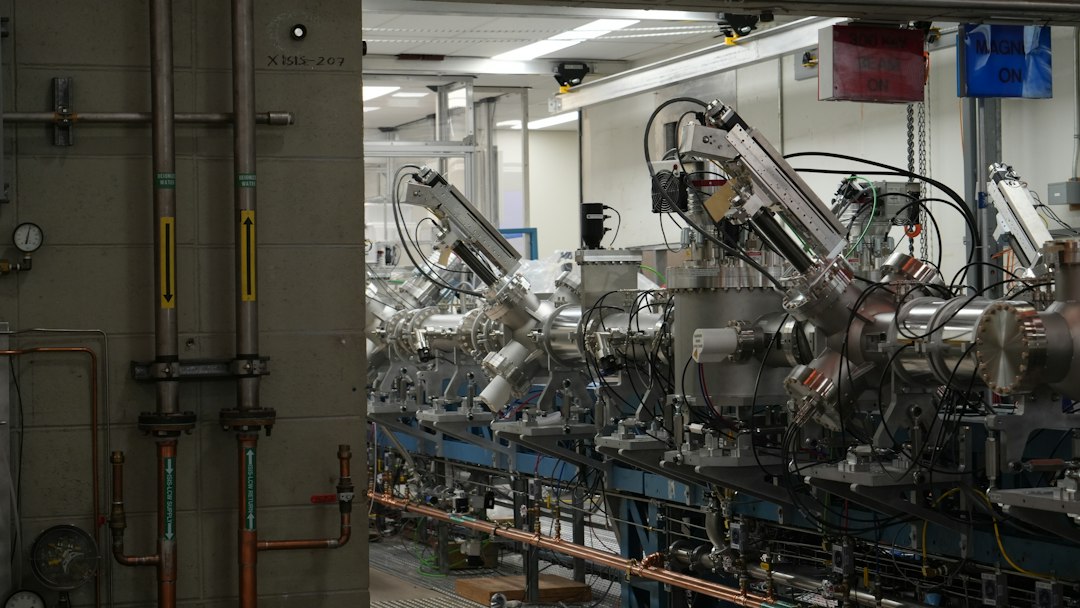
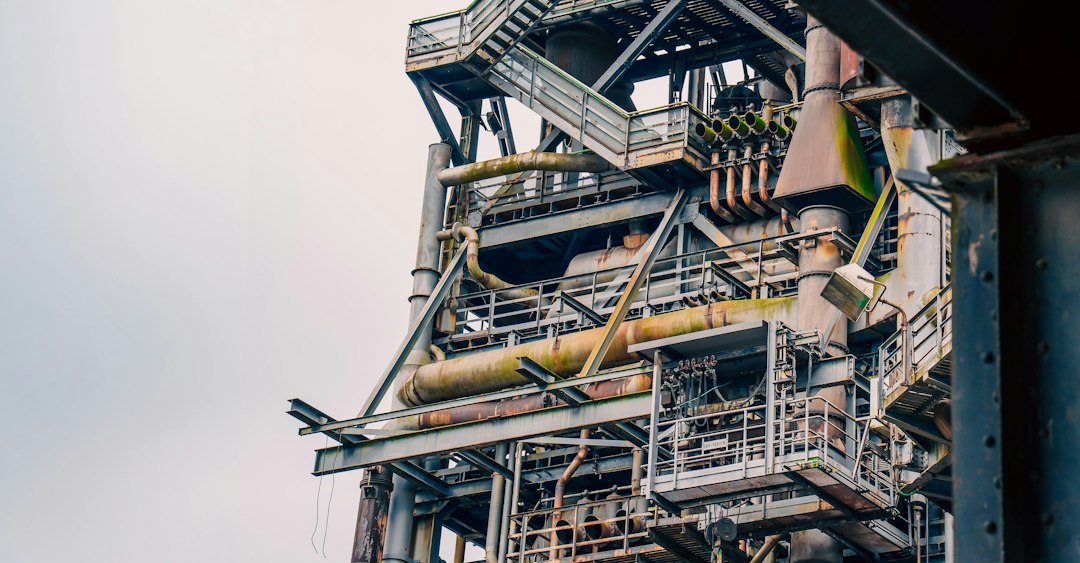
The parallel is deliberate. Policy architects on both continents have learned from the biodiesel era that blending mandates without production incentives create paper compliance rather than real infrastructure. A PtL plant running Fischer-Tropsch synthesis — feeding syngas from co-electrolysis or separate SOEC hydrogen and captured CO₂ — has a capital intensity that requires combined demand-pull and supply-push signals to clear an investment committee.
ReFuelEU PtL Sub-Mandate: The Compliance Calendar for 2030–2032
Under ReFuelEU Aviation, synthetic fuels — including Fischer-Tropsch e-SAF produced via the PtL pathway — face a dedicated sub-mandate rising from 0.7% in 2030. RED III’s RFNBO provisions underpin the renewable-electricity certification that PtL producers must demonstrate to qualify.[2] Compliance directors should note that the additionality, temporal correlation, and geographical correlation rules for RFNBOs create a documentation burden that is distinct from the blending-mandate arithmetic: a plant in Washington State exporting e-SAF into the EU supply chain must satisfy both the US credit regime and EU certification rules simultaneously.
The 2030 deadline is closer than it appears. Fischer-Tropsch PtL projects at meaningful scale — 50 MW electrolyser and above — carry a development-to-commissioning timeline of four to six years. Any project that reaches financial close in 2027 will be commissioning in the mandate window, not ahead of it. Projects still in feasibility in late 2026 are running out of room.
Efficiency Objection and Where PtL e-SAF Actually Wins
Critics correctly note that the e-fuel pathway is energy-intensive: the ICCT puts well-to-wheel efficiency at approximately 16% for e-fuels versus 72% for a battery-electric vehicle — over four times more efficient for the BEV. Ueckerdt et al. (Nature Climate Change, 2021) place the e-fuel-plus-combustion figure closer to 10%. For road passenger cars, this efficiency gap is a serious cost argument. The honest answer is that e-SAF is not competing with batteries in aviation: long-haul aircraft cannot be battery-powered at any commercially relevant horizon, which is precisely why ReFuelEU and Washington’s credit exist.
If geological (natural) hydrogen can be sourced without electrolysis — as Lorraine’s Pontpierre borehole findings are beginning to suggest — the electricity-cost objection weakens materially for any PtL plant close enough to exploit that resource. The Fischer-Tropsch back-end remains unchanged; only the hydrogen feedstock cost changes. That optionality is worth modelling now.
Sources
- Washington Introduces Credits For Sustainable Aviation Fuel Use – Travel Radar – Aviation News
- RED III: what the EU renewable energy directive means for SAF
Featured image via Unsplash.
This is not an official site. It is published by a private company and does not emanate from any public authority, institutional programme, government department or research organisation. It represents none of them and speaks for none of them in any capacity.
Nature of the content. Articles are documentary summaries drawn from cited public sources. They may contain inaccuracies, omissions or information that has since become outdated. No financial, technical, legal or investment advice is provided.
Always verify against primary sources. For any information concerning a public programme, a regulation or an institutional project, only the publications of the competent authority are authoritative.
© 2026 BESS Energie SRL · BCE 0698.949.732 · info@bess.be