Sequaris
CO₂ Quality and Capture Architecture: What Waste-to-Energy Offers PtL
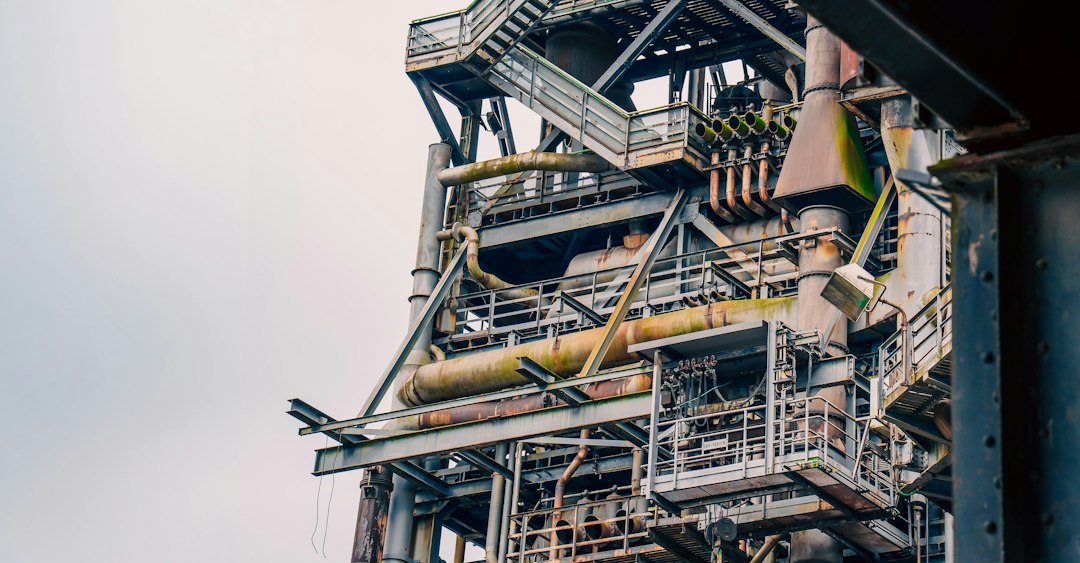
Waste-to-energy flue gas is compositionally heterogeneous — mixed organic feedstocks produce CO₂ streams carrying NOx, SOx, and trace contaminants — which makes post-combustion capture more demanding than point-source industrial capture from, say, cement or steel. INNOZHERO’s achievement of FID signals that the process engineering, including gas pre-treatment, amine or oxy-fuel scrubbing trains, and compression, has been de-risked to the satisfaction of CINEA and European Commission co-funders. For Fischer-Tropsch PtL designers, the critical output specification is CO₂ purity: syngas produced via reverse water-gas shift or Sunfire-style co-electrolysis requires inlet CO₂ with minimal sulphur compounds to avoid catalyst poisoning. A certified large-scale capture unit at a waste-to-energy site establishes the upstream purity envelope that downstream PtL operators need before committing to offtake agreements.
The biogenic fraction of municipal solid waste also carries a regulatory premium under RED III: CO₂ captured from biogenic combustion qualifies for a different carbon-accounting treatment than fossil-derived CO₂, potentially allowing PtL producers using it to claim RFNBO status under a stricter interpretation of the additionality framework. INNOZHERO’s location in Sweden — where biomass fractions in MSW are well-documented — strengthens that accounting case.
Process Integration: Heat Recovery and CO₂ as Fischer-Tropsch Feedstock
Waste-to-energy plants are thermally intensive assets producing high-grade steam at temperatures compatible with solid-oxide electrolysis (SOEC) heat integration. SOEC units operating at 700–850 °C benefit from external high-temperature heat input, reducing the electrical demand per kilogram of hydrogen or syngas produced. Co-locating a PtL unit — using co-electrolysis of captured CO₂ and steam to generate syngas directly for Fischer-Tropsch synthesis — with a waste-to-energy CCS plant would allow heat cascading that conventional PEM-based configurations cannot replicate. INERATEC’s ERA ONE containerised Fischer-Tropsch platform, designed for modular scale-up, is architecturally suited to exactly this kind of distributed, CO₂-rich industrial host site. The question is no longer whether the CO₂ is available at scale — INNOZHERO’s FID answers that — but whether the hydrogen supply and power purchase agreements can be structured cost-competitively.
On the hydrogen side, the well-to-wheel energy efficiency of e-fuels produced via electrolysis remains the sector’s sharpest challenge. The ICCT places the e-fuel pathway at approximately 16% well-to-wheel efficiency versus 72% for a battery-electric vehicle — over four times more efficient. Ueckerdt et al. (Nature Climate Change, 2021) put the combustion-pathway figure closer to 10%. These numbers are an argument about the cost of renewable electricity, not an argument against e-fuels per se: they point clearly toward sectors where batteries cannot substitute — long-haul aviation, deep-sea shipping, and heavy industry — which is precisely where waste-to-energy-sourced PtL synfuels would compete. If the hydrogen feeding the PtL unit is produced from geological (natural) sources rather than by electrolysis, the efficiency objection weakens considerably, since no renewable electricity is consumed in production.
AI-Assisted CO₂ Accounting and Process Optimisation
Large-scale CCS at waste-to-energy sites generates continuous, high-volume process data: capture rates, purity assays, compression energy, fugitive leak signals, and biogenic-fraction certificates. For compliance with ReFuelEU and RFNBO methodologies, this data must be auditable in near-real time. AI-driven digital process twins — trained on historical capture performance and cross-validated against sensor arrays — can flag deviations in CO₂ stream quality before they propagate downstream into Fischer-Tropsch catalyst beds, reducing catalyst replacement cycles and improving carbon conversion efficiency. The same telemetry infrastructure supports automated sustainability reporting under the EU’s Corporate Sustainability Reporting Directive, reducing manual audit burden for project operators. INNOZHERO’s construction phase, beginning late 2026, is the optimal window to design this instrumentation architecture from the ground up rather than retrofit it.
Sources
- Malaysia to launch carbon capture, utilisation and storage roadmap by end-November, says Akmal Nasrullah
- Horse Powertrain: Methanol-Range-Extender
Featured image via Unsplash.
This is not an official site. It is published by a private company and does not emanate from any public authority, institutional programme, government department or research organisation. It represents none of them and speaks for none of them in any capacity.
Nature of the content. Articles are documentary summaries drawn from cited public sources. They may contain inaccuracies, omissions or information that has since become outdated. No financial, technical, legal or investment advice is provided.
Always verify against primary sources. For any information concerning a public programme, a regulation or an institutional project, only the publications of the competent authority are authoritative.
© 2026 BESS Energie SRL · BCE 0698.949.732 · info@bess.be