Sequaris
Why 65% SAF Demands a PtL Answer
Biogenic feedstocks — used cooking oil, agricultural residues, municipal solid waste — face well-documented land-use and volumetric ceilings. Industry modelling consistently shows that HEFA and ASTM-approved bio-routes alone cannot reach the 65% penetration figure without triggering sustainability conflicts under RED III. Power-to-Liquid closes the gap: it decouples SAF production from biological feedstock availability by combining green hydrogen with captured CO₂ through reverse water-gas shift and Fischer-Tropsch synthesis to yield a fully fungible, drop-in kerosene meeting Jet A-1 specifications.
The PtL chain has three rate-limiting steps: electrolysis capacity, CO₂ supply, and Fischer-Tropsch reactor throughput. All three are moving simultaneously. The Climeworks Mammoth DAC facility captured 675 t CO₂ in H1 2026 — roughly six times its H1 2025 output — while cutting unit costs by more than 50%. At Yara Sluiskil in the Netherlands, Europe’s largest commercial CCS project now captures and liquefies 800 000 t CO₂ per year for sub-sea storage in Norway. These are not SAF projects, but they are proof that industrial-scale CO₂ handling is operationally real and cost-declining — the same infrastructure logic applies to PtL feedstock supply.
Process-Engineering Levers: Fischer-Tropsch, Co-Electrolysis and Heat Integration
State-of-the-art PtL design couples high-temperature co-electrolysis (SOEC, as demonstrated by Sunfire) with a compact Fischer-Tropsch reactor to convert CO₂ and H₂O directly into syngas, bypassing the separate reverse water-gas shift step and recovering substantial high-grade heat. The Sunfire approach achieves system electrical efficiencies that narrow — though do not eliminate — the well-to-wheel penalty relative to battery-electric ground transport. For aviation there is no battery alternative at meaningful range and payload: the efficiency argument that correctly disfavours e-fuels for cars simply does not apply to long-haul aircraft, which is precisely why the Sustainable Aviation roadmap can credibly assign SAF a 65% role without triggering the same engineering objections. Catalyst selectivity in the Fischer-Tropsch stage — targeting C8–C16 hydrocarbons to maximise kerosene yield and minimise wax recycle — remains an active optimisation frontier, with recent academic work pointing to cobalt-based catalysts under carefully controlled H₂:CO ratios as the productivity ceiling.
Heat recovery architecture is equally decisive for unit economics. Integrated PtL facilities operating at capacity factors above 4 000 full-load hours per year — achievable when co-located with firm renewable power or backed by green hydrogen storage — can recycle Fischer-Tropsch exotherm into the SOEC feed stream, reducing net electricity demand per tonne of SAF produced. AI-driven process control, already deployed in pipeline digital-twin applications elsewhere in the hydrogen value chain, is beginning to migrate into electrolysis stack management and reactor optimisation, consistent with the data-led editorial focus of this portal.
Regulatory Pressure and the ReFuelEU Enforcement Signal
The European Commission’s June 2026 infringement proceedings against 13 member states for failing to communicate ReFuelEU Aviation penalty regimes are a direct signal to SAF producers and project financiers: the regulatory floor is being enforced, not renegotiated. PtL SAF qualifies as an RFNBO under RED III and attracts the highest multiplier in the ReFuelEU blending mandate trajectory — making Fischer-Tropsch e-kerosene the premium compliance instrument for EU-regulated carriers. The UK roadmap’s 65% SAF target operates under a parallel national framework, but the trajectory is coherent with EU ambition and the two markets share supply chains, certification bodies and technology vendors.
Sources
- Alternative aviation fuel policy in the European Union – climatecatalyst
- Delay tactic or genuine solution? Carbon capture under fire again as EU invests in ‘unproven’ technology | Euronews
- Sustainable Aviation Fuels – GreenAir News
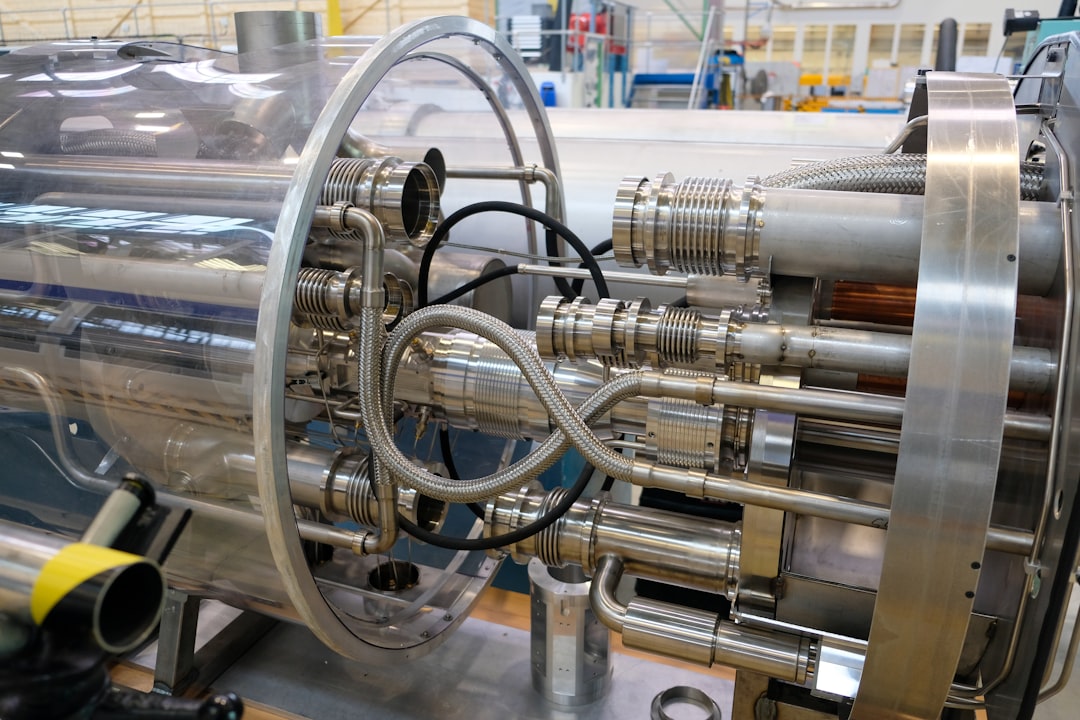
Featured image via Unsplash.
This is not an official site. It is published by a private company and does not emanate from any public authority, institutional programme, government department or research organisation. It represents none of them and speaks for none of them in any capacity.
Nature of the content. Articles are documentary summaries drawn from cited public sources. They may contain inaccuracies, omissions or information that has since become outdated. No financial, technical, legal or investment advice is provided.
Always verify against primary sources. For any information concerning a public programme, a regulation or an institutional project, only the publications of the competent authority are authoritative.
© 2026 BESS Energie SRL · BCE 0698.949.732 · info@bess.be