Sequaris
Why Offtake Scale Matters for PtL Project Finance
Fischer-Tropsch Power-to-Liquid plants — whether configured around Sunfire co-electrolysis, INERATEC’s modular ERA ONE reactors, or conventional SOEC-plus-RWGS architectures — share a common financing bottleneck: the absence of long-dated, creditworthy offtake. A 35-million-gallon, three-year commitment from an investment-grade counterpart like Google structurally addresses that gap. Lenders underwriting a PtL facility need revenue certainty over the capital-recovery horizon; deals of this magnitude and tenor begin to approach the coverage ratios project finance desks require.
The American Airlines–Google agreement does not specify the production pathway behind the certificates, and SAFc instruments by design decouple the physical fuel from the sustainability attribute. That flexibility is commercially useful in the near term but creates a technology-neutrality problem for dedicated PtL investors: certificates generated from HEFA co-processing currently cost less than Fischer-Tropsch e-fuel, meaning PtL producers must either compete on price or secure pathway-specific premium contracts.
The CO₂ Supply Chain: DAC Performance as a PtL Enabler
A frequently underweighted constraint for Fischer-Tropsch PtL is the CO₂ inlet stream. The Climeworks Mammoth facility — the world’s largest direct-air-capture plant — captured 675 tonnes of CO₂ in the first half of 2026, roughly six times its throughput a year earlier. While 675 t H1⁻¹ remains orders of magnitude below what a commercial-scale PtL facility consuming DAC-sourced carbon would require, the trajectory illustrates that DAC cost and throughput curves are moving in the right direction. AI-assisted optimisation of sorbent cycling, heat integration and compressor scheduling is central to that improvement — precisely the class of data-driven process control that justifies dedicated analytical platforms in this sector.
For PtL developers, the practical implication is a sourcing hierarchy: point-source industrial CO₂ remains cheaper and more abundant today, but the regulatory trajectory under RED III and ReFuelEU — which will tighten RFNBO and recycled-carbon-fuel definitions — is gradually closing the window on fossil-derived CO₂ as a compliant feedstock. DAC performance milestones therefore have direct read-across to PtL project bankability timelines.
Regulatory Pressure and the 13-State Infringement Proceedings
The European Commission’s June 2026 infringement proceedings against 13 Member States for failing to communicate penalty regimes under ReFuelEU Aviation — required by the December 2024 deadline — add enforcement urgency to what has been a largely aspirational compliance framework. Airlines operating EU routes face blending mandates that step up through 2030, 2035 and beyond, with a dedicated PtL sub-mandate entering force in 2030. Delayed national transposition weakens the price signal that would otherwise accelerate Fischer-Tropsch investment decisions.
The efficiency objection to e-fuels is most acute in road transport, where battery-electric drivetrains convert roughly 70–80% of input electricity to motion versus 13–20% for an e-fuel pathway — a roughly fivefold renewable-electricity penalty. Aviation is the sector where that objection carries least weight: energy density, range and existing fleet infrastructure leave no credible battery alternative for long-haul operations, which is precisely why ReFuelEU’s PtL sub-mandate exists and why corporate SAFc deals of the AA–Google scale are commercially rational rather than merely reputational.
Sources
- American Airlines and Google sign record-breaking sustainable aviation fuel agreement — American Airlines Newsroom
- Alternative aviation fuel policy in the European Union — ClimateCatalyst
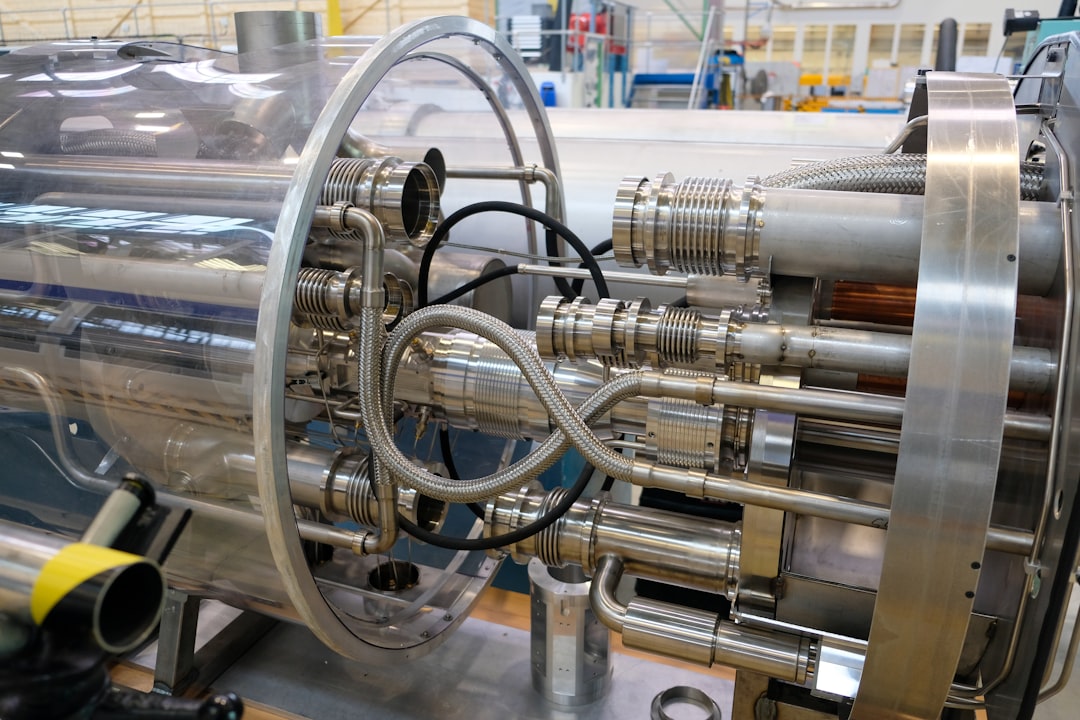
Featured image via Unsplash.
This is not an official site. It is published by a private company and does not emanate from any public authority, institutional programme, government department or research organisation. It represents none of them and speaks for none of them in any capacity.
Nature of the content. Articles are documentary summaries drawn from cited public sources. They may contain inaccuracies, omissions or information that has since become outdated. No financial, technical, legal or investment advice is provided.
Always verify against primary sources. For any information concerning a public programme, a regulation or an institutional project, only the publications of the competent authority are authoritative.
© 2026 BESS Energie SRL · BCE 0698.949.732 · info@bess.be