Sequaris

RFNBO Certification: The Gate That Controls PtL Value
Under RED III, hydrogen supplied to a Fischer-Tropsch or co-electrolysis PtL unit qualifies as a Renewable Fuel of Non-Biological Origin only if strict additionality, temporal correlation and geographical correlation criteria are satisfied. For a cross-border pipeline like HY4Link, the geographical correlation rule is particularly complex: the renewable electricity underpinning electrolysis in one bidding zone must be demonstrably matched to the hydrogen injected at the Belgian, Luxembourgish, French or German interconnection point. Until the delegated acts governing cross-border hydrogen infrastructure are fully transposed into national law across all four jurisdictions, PtL producers drawing on HY4Link face regulatory ambiguity that affects bankability.
This is not an abstract risk. A PtL facility using HY4Link hydrogen that fails RFNBO certification cannot sell its Fischer-Tropsch kerosene as SAF under ReFuelEU Aviation, loses access to the RFNBO sub-mandate premium, and may face CBAM exposure on any CO₂-derived carbon inputs crossing the EU border. Compliance and marketing directors planning 2030–2032 offtake agreements need certification pathway clarity now, not at commissioning.
Process-Engineering Implications for Fischer-Tropsch Plants in the Greater Region
From a process-engineering standpoint, HY4Link’s potential is substantial. A dedicated hydrogen pipeline eliminates the energy penalty of on-site electrolysis integration at smaller Fischer-Tropsch units — relevant for modular PtL designs such as INERATEC’s ERA ONE containerised reactors, which are sized for distributed deployment rather than gigascale centralised production. Sunfire co-electrolysis units similarly benefit from pipeline-grade H₂ supply that relaxes purity management burdens upstream of the reverse water-gas shift or solid-oxide stack. Heat recovery loops and catalyst lifetime both improve when hydrogen feed pressure and composition are stable — exactly what a dedicated backbone provides versus trucked liquid hydrogen.
The efficiency argument matters here too. Well-to-wheel efficiency for PtL e-fuels is roughly 13–20% versus 70–80% for battery-electric drivetrains — approximately five times more renewable electricity per kilometre. That gap is the central objection raised by Transport & Environment and the ICCT, and it is a legitimate one for road transport. The compelling answer is sectoral specificity: aviation, deep-sea shipping and hard-to-abate industry cannot run on batteries, and it is precisely those sectors that HY4Link’s hydrogen — if RFNBO-certified — would serve via Fischer-Tropsch kerosene and e-methanol.
What Compliance Directors Must Track Before 2030
Three regulatory milestones govern the HY4Link-to-PtL compliance calendar. First, national transposition of RED III’s delegated acts on hydrogen — particularly the cross-border geographical correlation methodology — must be confirmed in all four member states. Second, the European Commission’s approval mechanisms for RFNBO certification bodies need to be operational so that hydrogen injected at, say, a Belgian electrolysis facility and withdrawn in Lorraine for Fischer-Tropsch synthesis can carry a traceable guarantee of origin. Third, ReFuelEU Aviation’s RFNBO sub-mandate of 1.2% by 2030 creates a hard commercial deadline: SAF producers who cannot demonstrate RFNBO compliance by that date will be displaced by competitors who can.
Belgium’s simultaneous geological hydrogen survey (the BE.Hydrogen programme, a subsurface mapping initiative launched March 2026 by the Belgian Geological Survey) adds a longer-horizon variable: if geological hydrogen is eventually confirmed at commercial scale in the Greater Region, it could supply HY4Link without electrolysis energy costs, substantially improving well-to-wheel efficiency and weakening the standard efficiency objection to e-fuels. That scenario remains speculative — no commercially exploitable natural hydrogen resource has been confirmed on Belgian territory — but it is the kind of structural shift that 2032 offtake contracts should include optionality provisions for.
Sources
- HY4Link: Cross-border H2 infrastructure project in Belgium, Luxembourg, France and Germany to accelerate decarbonisation
- RED III: what the EU renewable energy directive means for SAF
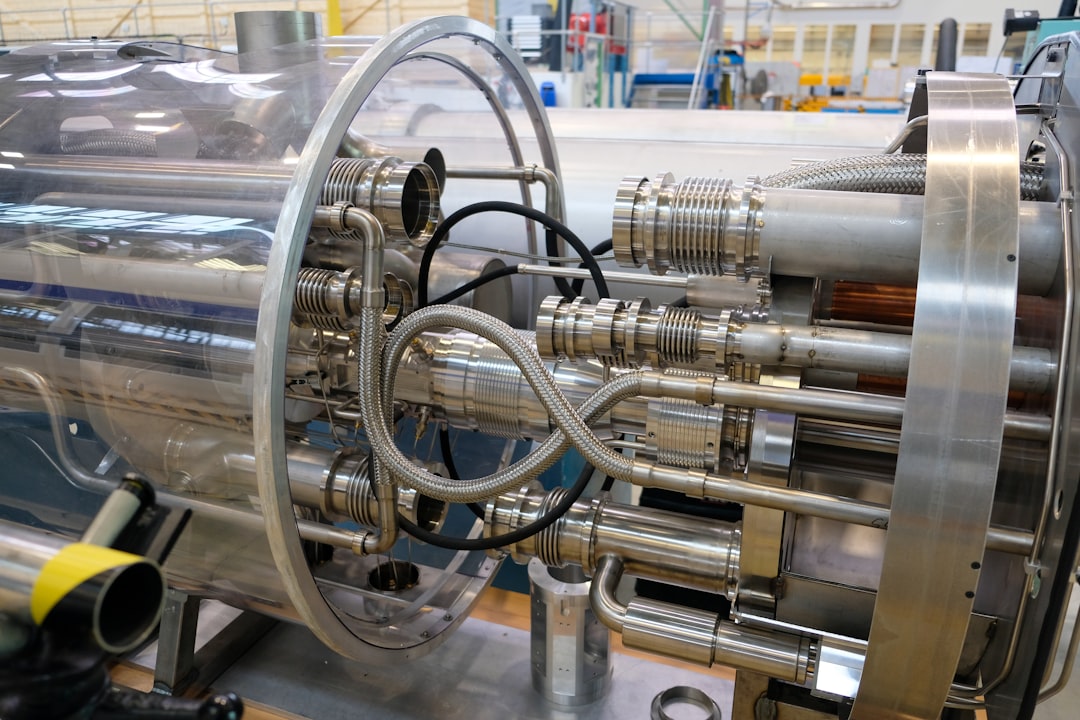
Featured image via Unsplash.
This is not an official site. It is published by a private company and does not emanate from any public authority, institutional programme, government department or research organisation. It represents none of them and speaks for none of them in any capacity.
Nature of the content. Articles are documentary summaries drawn from cited public sources. They may contain inaccuracies, omissions or information that has since become outdated. No financial, technical, legal or investment advice is provided.
Always verify against primary sources. For any information concerning a public programme, a regulation or an institutional project, only the publications of the competent authority are authoritative.
© 2026 BESS Energie SRL · BCE 0698.949.732 · info@bess.be